Rebranding Logistics for Gen Z
- Dec 16, 2025
- 3 min read
Updated: Feb 2

The Challenge: The “Moving Boxes” Myth
The Transport and Logistics Bureau (TLB) tasked Production Avenue with translating the Government’s blueprint for modern logistics into a viable career proposition for the city’s next generation. In Hong Kong, the definition of a successful career has traditionally been narrow: jobs in medicine, law, and finance tend to preside over the aspirational landscape. Logistics, by contrast, was suffering from a perception lag. To the target demographic, students and young professionals navigating a high-pressure, competitive environment, the sector was viewed as lacking in upward mobility.
We needed to dismantle the “moving boxes” stereotype and replace it with a narrative of data, speed, and global connectivity.
The brief from TLB required a rebranding of the industry as “smart, innovative, high-end.” In addition to informing, the suite of videos was also positioned as a recruitment tool. We needed to dismantle the “moving boxes” stereotype and replace it with a narrative of data, speed, and global connectivity.

The Strategic Pivot: From Stability to “Future-Proof”
Traditional narratives around the logistics sector often emphasise its role as a stable economic pillar. However, relying on this reputation creates a feedback loop that frames the industry as essential—especially in a transport hub like Hong Kong—but static. During our pre-production workshops, we noted that this offer alone is insufficient for a generation facing unique economic anxieties and housing pressures.
Young people want stability, yes, but they also value mobility and viability.
We showed that this is a sector for problem solvers.
We needed to show that the logistics sector is future-proof. We shifted the visual focus from the muscle of the industry to its brain. The strategy was to position logistics as the engine of the city, a sector that offers a sense of agency and global connection often missing in traditional corporate roles.

The Execution: Visualising the Invisible
To execute this strategy, we had to make smart logistics visible and desirable. We needed to create a visual language that competed with the polished aesthetics of the fintech and tech sectors.
Visualising Intelligence: A person sitting at a computer is not inherently cinematic. We bypassed standard office shots whenever we could and filmed inside integrated operations and control centres, where teams oversee live data flows across the supply chain. By focusing on screens displaying real-time AI route planning and cold-chain temperature controls, we provided visual evidence of the industry’s sophistication. We demonstrated that this is a sector for problem solvers.
Kinetic Energy: Hong Kong is a city that never stops, and neither does its supply chain. To counter the static nature and traditional perception of the warehouse, we utilised hyperlapses and drone footage to connect 3D models of logistics centres with real-world footage, visually representing speed, scale, and the global supply chain. We wanted the viewer to feel the city’s pulse and their potential role within it.
Authenticity Over Scripting: We knew that an over-scripted delivery would alienate a sceptical Gen Z audience. We focused on peer-to-peer storytelling, allowing young professionals to speak candidly about their career progression. This approach humanised the industry, offering a relatable counter-narrative to the high-stress stories often associated with the local job market.






The Outcome
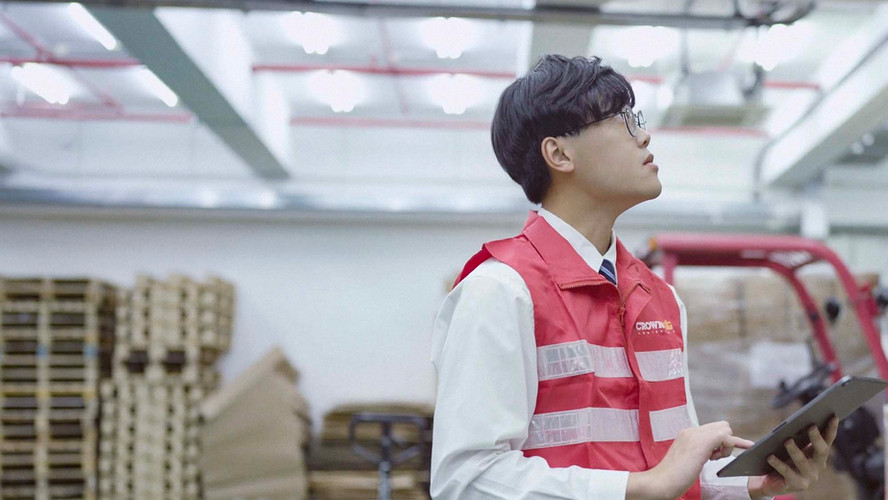
The final deliverables—four full-length features and abridged social cuts—provided the Government with an asset library that authentically argues for logistics as a STEM-adjacent career path.
By acknowledging the unspoken aspirations of the local workforce, we moved the conversation away from manual labour and towards a narrative of innovation, helping the client compete for talent in one of the world’s most competitive employment markets.